
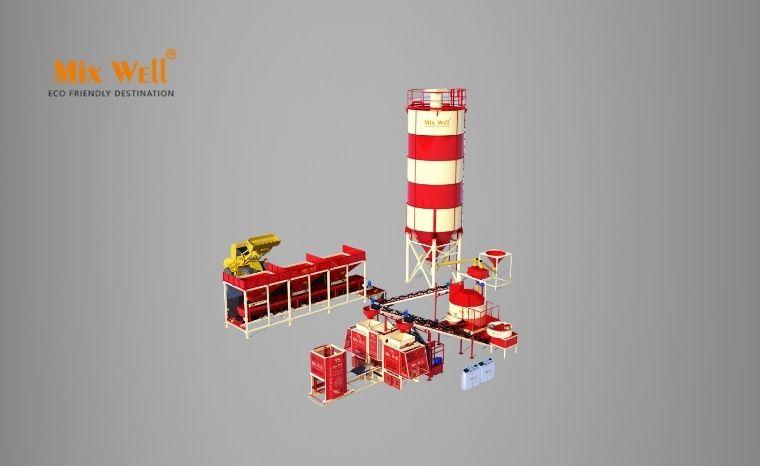
The building industry is now shifting towards building materials that are environmentally friendly and yet economical, and fly ash bricks have been a choice to be considered. The bricks are characterized by strength, even size, and sustainability. The manufacturers use the fully automatic fly ash brick machine to manufacture them on a large scale. The working principle of this machine is useful in enhancing efficiency in production, ensuring quality, and minimizing the cost of operation.
A fly ash brick-making machine is an apparatus that is used to transform raw materials, which include fly ash, cement, sand, and water, into solid and strong bricks. With a fully automatic system, the whole process, starting with the feeding of raw material to the stacking of the bricks, is automated. This saves on manual work, and it guarantees quality production.
The principle of operation is through an appropriate combination of materials, high-pressure compaction, vibration technology, and systematic curing in order to produce strong and uniform bricks.
Raw material feeding is the initial operation in the principle of working of a fully automatic fly ash brick machine. Through hoppers, fly ash, cement, sand, and aggregates enter the machine. These materials are measured in correct proportions by an automatic system of batching. The importance of correct proportioning is that the proportioning of the bricks directly influences the strength, durability, and finish.
Automation is used to guarantee the similarity of composition in all the batches without introducing human error, and therefore the same high quality of bricks.
After weighing the materials, they are moved to a mixer. Mixer mixes the raw materials and water in a way that will result in a homogenous mix. This measure is necessary to make sure that cement covers every particle of fly ash and sand in an appropriate way that is necessary for bonding and the strength of the bricks.
A fully automatic fly ash brick machine uses programmable logic controllers (PLC) to control the mixing process, which enables the control of the mixing time and consistency to be small.
Once the mixture is mixed, it is transported to the brick molding unit. In this case, the material is poured into the shapes and size molds that are needed. Large pressure is implemented with the help of hydraulic, mechanical systems, and vibration.
The pressure and vibration ensure the mixture does not have any air pores and compress it tightly. The process makes the final shape of the brick and enhances the density and compressive strength. Bricks of different sizes can be made under various dimensions using different molds, depending on the market demand.
The moldings are automatically ejected by the machine onto the pallets or conveyors after the process of molding has been completed. This removes manual handling, and the speed of production is enhanced. In modern systems, the bricks are moved to an automatic stacking unit, whereby they are neatly stacked to cure.
This automation guarantees a seamless flow of work and minimizes the possibility of damaging the bricks during work.
One of the most significant processes in the working principle of a fully automatic fly ash brick machine is curing. The new moulded bricks are transferred into curing chambers or open curing yards. Curing is done by either water or steam curing, and it normally takes 7 to 14 days.
Curing enables cement to hydrate, and this enhances the strength and resistance of the bricks. The cure is to make sure that bricks comply with the requirements of construction and are applicable in the load and non-load bearing applications.
The efficiency of a fully automatic fly ash brick machine depends on a number of technical features:
PLC Control Panel: Automatically controls the whole process and checks the performance.
Hydraulic Pressure System: This is necessary to provide even compaction and hard formation of bricks.
Enhanced Vibration Mechanism: It is used to enhance density and surface finish.
Automatic Material Feeding: Keeps accuracy and minimizes wastage.
Conveyor and Stacking System: Allows a continuous and speedy production.
All these characteristics are combined to achieve productivity and uniform quality of bricks.
The principle of its operation also demonstrates the advantages of the fully automatic fly ash brick machine:
Large capacity production with constant production.
Standard size of bricks and strength.
Reduced labor requirement
Lower material wastage
Green utilization of industrial wastes (fly ash).
Safety and operation control improvement.
These benefits qualify the machine to be used in commercial and industrial production facilities for bricks.
A fly ash brick-making machine is operated on the principles of automation, accuracy, and efficiency. Since the process involves feeding and mixing of raw materials before molding, stacking, and curing, all processes are aimed at generating high quality bricks with minimum human touch. Full automation fly ash brick machine gives stability in production, lowers operating expenses, and encourages sustainability in construction activities. Through the technology, the modern construction industry will help the manufacturers of bricks to be more productive, have control on quality and long term growth of the business.
The rising market need for sustainable building...
Read More
The construction industry is taking a new trend...
Read More
The construction industry is changing at a high...
Read More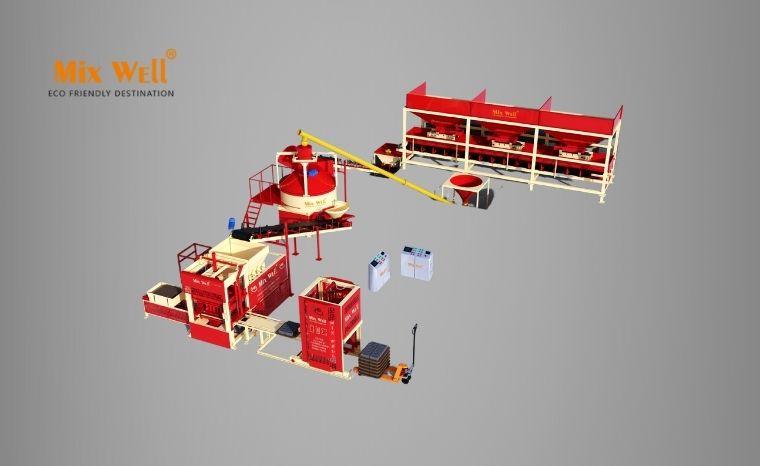
The construction sector is expanding at a fast ...
Read More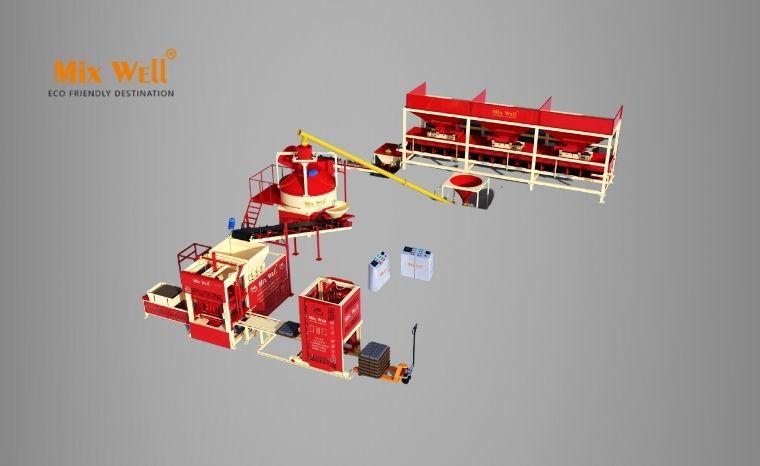
Due to the rising infrastructure needs, the con...
Read More
Fly ash bricks have gradually gained importance...
Read More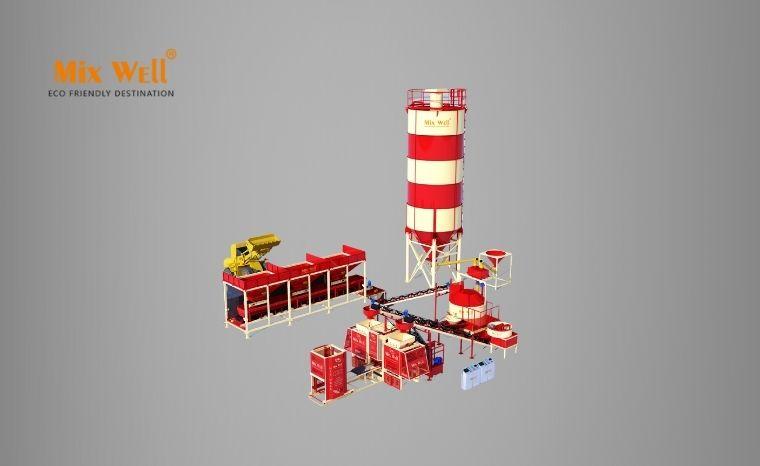
The construction business is also becoming very...
Read More
The use of paver blocks is more acceptable as c...
Read More
The construction industry requires good buildin...
Read More
The demand for building materials that are stro...
Read More
Brick Machinery is an industry that is in the b...
Read More
The building sector is shifting quickly towards...
Read More
The construction industry keeps changing due to...
Read More
As cities expand at a fast rate and more and mo...
Read More
The building industry is now shifting towards b...
Read More
The construction business requires swiftness, p...
Read MoreⓒCopyright 2024 Mix Well. All rights reserved
Developed By SM Infosoft


